
A holistic approach to pediatric care in Frisco and Plano, Texas

Award winning, top rated Pediatrician serving Frisco, Plano, Allen and North Dallas

PARENTING FUNNIES (2)

Leave a comment


Leave a comment

NEW RESEARCH FINDINGS ON AUTISM IN CHILDREN ( & PREGNANCY)

STUDY

Pregnant women exposed to heavy diesel pollution are twice as likely to have an autistic child as those living in areas with low pollution, according to a new study from the Harvard School of Public Health. The results add to a growing body of research linking air pollution to autism.

DETAILS

There is no known single cause for autism, but it is generally accepted that it is caused by abnormalities in brain structure or function. Brain scans show differences in the shape and structure of the brain in children with autism versus typical children. No one gene has been identified as causing autism.

Autism tends to occur more frequently than expected among individuals who have certain medical conditions, including Fragile X syndrome, tuberous sclerosis, congenital rubella syndrome, and untreated phenylketonuria (PKU). Some harmful substances ingested during pregnancy also have been associated with an increased risk of autism.

Research indicates that other factors besides the genetic component are contributing to the rise in increasing occurrences of autism, such as environmental toxins (e.g., heavy metals such as mercury), which are more prevalent in our current environment than in the past. Per research, high air concentrations of diesel, mercury, lead, manganese, and methylene chloride significantly increase the risk of giving birth to a child with autism.

Link to vaccines: One of the greatest controversies in autism is centered on whether a link exists between autism and certain childhood vaccines, particularly the measles-mumps-rubella (MMR) vaccine. Despite extensive research, no reliable study has shown a link between autism and the MMR vaccine. Avoiding childhood vaccinations can place your child in danger of catching and spreading serious diseases, including whooping cough (pertussis), measles or mumps.

FACTS AND STATISTICS

1% of the population of children in the U.S. ages 3-17 have an autism spectrum disorder. Prevalence is estimated at 1 in 88 births significantly up from 1 in 150 in 90s. 1 to 1.5 million Americans live with an autism spectrum disorder. It is the fastest-growing developmental disability with 1,148% growth rate.

But most importantly, the cost of lifelong care can be reduced by 2/3 with early diagnosis and intervention.

WHAT CAN YOU DO?

Researchers identified diesel as the most dangerous pollutant linked to autism. Diesel pollution is strongest within 1,500 feet of major roads and highways. Be careful how much exposure you have to pollutants. If necessary, wear a mask.

Expectant mothers should take prenatal vitamins and eat foods high in healthy oils, stay away from cigarette smoke, and maintain a healthy weight throughout pregnancy, all of which have been shown to reduce the risk of have having a child with autism.

Leave a comment

HOW YOUR BRAIN INFLUENCES YOUR FOOD

Interesting article in BBC.

Cutlery ‘can influence food taste’ By Helen Briggs, BBC News

Our perception of how food tastes is influenced by cutlery, research suggests.

Size, weight, shape and color all have an effect on flavor, says a University of Oxford team.

The study in the journal Flavour suggests the brain makes judgments on food even before it goes in the mouth.

1. Cheese tastes saltier when eaten from a knife rather than a fork;

2. While white spoons make yogurt taste better, experiments show.

3. Food tasted sweeter on the small spoons that are traditionally used to serve desserts.

4. Color contrast was also an important factor – white yogurt eaten from a white spoon was rated sweeter than white yogurt tasted on a black spoon.

5. Cheese on a knife, tasted saltier than cheese on spoon, fork or toothpick.

6. people generally eat less when food is served on smaller plates.

The new research into how the brain influences food perceptions could help dieters or improve gastronomic experiences at restaurants, said Prof Spence.


Leave a comment

TO ALL PARENTS WHO DON’T UNDERSTAND AUTISM, WATCH!


Leave a comment

Ten Things Your Teen Wants You to Know (But May Not Tell You)

10 Things Your Teen Wants You to Know (But May Not Tell You)

1. Please don’t give me everything I want. Saying no shows me you care. I appreciate guidelines.

2. Don’t treat me as if I were a little kid. Even though you know what’s "right", I need to discover some things for myself.

3. Respect my need for privacy. Often I need to be alone to sort things out and daydream.

4. Never say, "In my day…". That’s an immediate turn off. Besides, the pressures and responsibilities of my world are more complicated than they were when you were my age.

5. I don’t pick your clothes; please don’t criticize mine. We can disagree and still respect each other’s choices.

6. Refrain from always rescuing me; I learn most from my mistakes. Hold me accountable for the decisions I make in life; it’s the only way I’ll learn to be responsible.

7. Be brave enough to share your disappointments, thoughts and feelings with me. (By the way, I’m never too old to be told I’m loved.)

8. Don’t talk in volumes. I’ve had years of good instruction; now trust me with the wisdom you have shared.

9. I respect you when you apologize for a thoughtless deed or word on your part. It proves that neither of us is perfect.

10. Set a good example for me as God intended you to do. I pay more attention to your actions than your words.

– Dr. Kevin Leman


Leave a comment

I PROMISE MYSELF…

Another lovely poem on healthy life.

I Promise Myself…

To be so strong that nothing can disturb my peace of mind.

To talk health, happiness, and prosperity to every person I meet.

To make all my friends feel that there is something worthwhile in them.

To look at the sunny side of everything and make my optimism come true.

To think only of the best, to work only for the best, and to expect only the best.

To be just as enthusiastic about the success of others as I am about my own.

To forget the mistakes of the past and press on to the greater achievements of the future.

To wear a cheerful expression at all times and give a smile to every living creature I meet.

To give so much time to improving myself that I have no time to criticize others.

To be too large for worry, too noble for anger, too strong for fear, and too happy to permit the presence of trouble.

To think well of myself and to proclaim this fact to the world, not in loud words, but in great deeds.

To live in the faith that the whole world is on my side, so long as I am true to the best that is in Me.

–Christian D. Larson


Leave a comment

30 DR. SEUSS QUOTES THAT CAN CHANGE YOUR LIFE

I love Dr. Seuss. So when I saw this, I knew you will enjoy them too. Share with your kids.

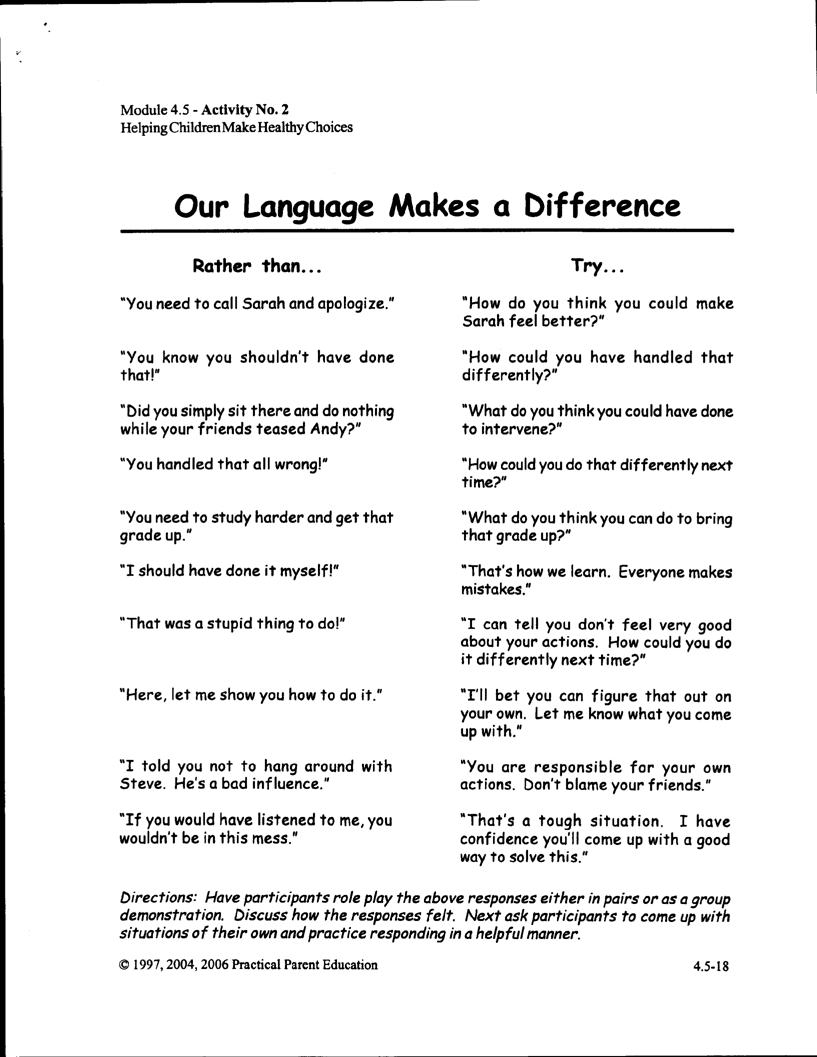
PARENTING: A YOGA OF THE TONGUE

Leave a comment


Leave a comment

“WHEN YOU THOUGHT I WASN’T LOOKING”

Go this from a friend of ours and thought it was a beautiful sentiment to share with parents.

If you are a parent and wonder where it’s all going, we hope the following words give you peace …

WHEN YOU THOUGHT I WASN’T LOOKING

When you thought I wasn’t looking,

I saw you hang my first painting on the refrigerator,

and I wanted to paint another one.

When you thought I wasn’t looking,

I saw you feed a stray cat,

And I wanted to be kind to animals.

When you thought I wasn’t looking,

I saw you make my favorite cake for me,

And I knew that little things are special things.

When you thought I wasn’t looking,

I heard you pray

And I knew there is a God I could always talk to.

When you thought I wasn’t looking,

I felt you kiss me goodnight,

And I felt loved.

When you thought I wasn’t looking,

I saw the tears you shed,

And I learned that sometimes things hurt,

but it’s all right to cry.

When you thought I wasn’t looking,

I saw that you cared

And I wanted to be everything that I could be.

When you thought I wasn’t looking,

I saw you react graciously to the difficulties in life,

And I saw that I could do the same and still have joy.

When you thought I wasn’t looking,

I saw you forgive over and over again,

And I learned the value of forgiveness.

When you thought I wasn’t looking,

I heard you praying for me,

And I learned how to do it too.

When you thought I wasn’t looking,

I saw you sacrificing to give to others,

And I learned that you truly gain from giving.

When you thought I wasn’t looking,

I saw you healing hurts and calming fears,

And now I know how to do it with others.

When you thought I wasn’t looking,

I learned so many lessons about how to love and give,

And these now bring blessings to me every day.

When you thought I didn’t notice,

I saw all the many times you loved and sacrificed,

And I realized that you are the proof that God exists.

When you thought I wasn’t looking,

I looked …

And wanted to say thanks for all the things I saw,

When you thought I wasn’t looking.

Author: Mary Rita Schilke Korazan


Leave a comment

YOUR ASSUMPTION IS WRONG

Have you ever wondered why we have a higher incidence of cancer, MS, mental health issues like depression or ADHD lately?

As society marches well into 21st century shouldn’t we care about how we live and work impact our children’s world? You may be wondering about where I am heading with this….

In medicine the first motto is “First, do no harm”. In Business, the motto however seems to be “First, do no loss”. The two don’t play well together always. In a recent investigative report in the NY Times, Ian Urbina shines spotlight on a hidden assumption that we live with. We assume that the chemicals that we use in daily life (like shampoos, detergents and other consumer products) have been thoroughly tested and proved to be safe. That, they cause no harm to our kid’s life/health.

This assumption is wrong.

Unlike pharmaceuticals or pesticides, industrial chemicals do not have to be tested before they are put on the market. Regulators, doctors, environmentalists and the chemical industry agree that the country’s main chemical safety law, the Toxic Substances Control Act, needs fixing. They do not agree, however, on who should have to prove that a chemical is safe. Companies have to alert the Environmental Protection Agency before manufacturing or importing new chemicals. If the E.P.A. does not take steps to block the new chemical within 90 days or suspend review until a company provides any requested data, the chemical is by default given a green light. The overwhelming majority of chemicals in use today have never been independently tested for safety. Of the 85000 industrial chemicals in use today the EPA has banned only five substances, and that too only in specific applications: polychlorinated biphenyls, dioxin, hexavalent chromium, asbestos and chlorofluorocarbons.

Part of the growing pressure to update federal rules on chemical safety comes from advances in the science of biomonitoring, which tells us more about the chemicals to which we are exposed daily, like the bisphenol A (BPA) in can linings and hard plastics, the flame retardants in couches, the stain-resistant coatings on textiles and the nonylphenols in detergents, shampoos and paints. Hazardous chemicals have become so ubiquitous that scientists now talk about babies being born pre-polluted, sometimes with hundreds of synthetic chemicals showing up in their blood.

So what can we do?

For now, consumers and companies looking for safer products are largely on their own.

1) We owe to ourselves and our kids to leave a world that is better than the one that we inherited. So, take action. Write to your senator if you are concerned about the lax regulations on chemicals.

2) While step 1 may take time before it pays, in the short term, make your dollars speak loudly

a. Buy only products that are made of only organic compounds. (We for example buy our organic shampoo from Sprouts in the Plano.)

b. If you want to buy a commercial product, buy European consumer products. Europe has a much stricter laws on chemical use. They seem to follow the common sense logic “first prove that the chemical is safe, before you expose them to public”

c. Check out natural alternatives – products from the orient (like shikakai are nearly as effective as shampoo)

In general, boycott products with long list of unknown chemicals. In some sense, since skin absorbs chemicals, think of it as “putting these chemicals in your mouth”.

Then perhaps we have a legitimate chance of beating depression and cancer.


Leave a comment

ANOTHER LOVELY POEM ON RAISING LOVING KIDS

CHILDREN LEARN WHAT THEY LIVE

If children live with criticism, they learn to condemn.

If children live with hostility, they learn to fight.

If children live with fear, they learn to be apprehensive.

If children live with pity, they learn to feel sorry for themselves.

If children live with ridicule, they learn to feel shy.

If children live with jealousy, they learn to feel envy.

If children live with shame, they learn to feel guilty.

If children live with encouragement, they learn confidence.

If children live with tolerance, they learn patience.

If children live with praise, they learn appreciation.

If children live with acceptance, they learn to love.

If children live with approval, they learn to like themselves.

If children live with recognition, they learn it is good to have a goal.

If children live with sharing, they learn generosity.

If children live with honesty, they learn truthfulness.

If children live with fairness, they learn justice.

If children live with kindness and consideration, they learn respect.

If children live with security, they learn to have faith in themselves and in those about them.

If children live with friendliness, they learn the world is a nice place in which to live.

– Copyright © 1972 by Dorothy Law Nolte


Leave a comment

THE HIDDEN POWER OF A DIAGNOSIS

Can a “word” bias your parenting?


If I tell you that one properly placed word can change the way you view your child’s ailment, you will probably pooh-pooh it. But that is exactly what happens when you meet your doctor.


In a recent findings in Pediatrics, Scherer and her colleagues published that a physician’s choice of words can have a significant impact on parental decision-making.


The Research:

Between 2011 and 2012, researchers surveyed 175 parents (average age ~ 35) in two setting:

– a pediatric clinic waiting room

– an examination room.

Most participants were mothers and described as highly educated.

The average age of their kids were 4.5 years.

About one-fifth of these children had been previously diagnosed with GERD.


The Result:

Those parents who were given a “GERD” diagnosis ended up being interested in treating their infant with drugs despite being specifically cautioned that drugs wouldn’t work. Those without the specific diagnosis name, were not.


So What?

The study highlights the powerful impact that a physician’s choice of words can have on parental decision-making, while emphasizing the importance of good doctor-patient/parent communication.


So, next time you walk into a physician’s office, remember this hidden bias that might force you to put your child on unnecessary chemicals.


Leave a comment

LIFE LESSON FOR TEENS

  1. Don’t Drink or text and Drive: Car crashes are the leading cause of death for US teens, according to the CDC. In fact, 12 kids age 16-19 die every day from accident-related injuries. Dangerous driving behaviors—like drinking (obviously), but also texting/calling, and having multiple passengers in the car—play a big role in these shocking numbers. Lead by example—don’t let your kids see you fumbling around in your purse to answer your ringing phone when you’re at the wheel.
  2. Tell your kids that it’s OK to worry: And make sure your kids know that you’re there for them. Check in with your kids frequently about whatever may be going on—whether it’s bullying, virus fears or someone losing a job—to see how they’re feeling, and explain how your family is dealing with it.
  3. Teach your child to love his/her body: Studies routinely find that about 40% of elementary school girls and 25% of elementary school boys are dissatisfied with their bodies. Unhappy and self-conscious kids report more frequent feelings of depression, insecurity, and anxiety. Thwart unhealthy body image and counter the media images that bombard your kids by talking to them.
  4. Help them get sleep: More than 25% of the kids surveyed (between 11 and 17 years old) had one or more symptoms of insomnia—and were much likelier to use drugs, experience depression, or have problems with school work, jobs and perceived health. Set a technology curfew with your kids, and make sure they understand why. Shut off the TV and have your children stop using phones and computers at least an hour before bed.
  5. Be smart about the web: If your kid’s active online, ask to see her social network profile(s)—and tell her not to post anything that you, a teacher, or a college recruiter shouldn’t view.
  6. Maintain an open line of communication so the big chat isn’t such a big deal. If your kid comes to you and asks about sex, turn the question back, and ask her what she knows, or what she means, by the term. Also reiterate family values into conversations about intimacy and sex.
  7. Value Friendship: It’s not about being the most popular kid on the playground. Having one or two best friends is more closely correlated with staving off depression and loneliness than is overall popularity.
  8. Be grateful: Research suggests that grateful people have more energy and optimism, are less bothered by life’s hassles, are more resilient in the face of stress, have better health, and suffer less depression than the rest of us.


Source: http://www.prevention.com


Leave a comment

BRAIN BOOSTER TIP II

  1. Encourage curiosity: Parents who show curiosity and encourage their children to explore new ideas teach them a valuable lesson: Seeking knowledge is important. Support your kids’ hobbies and interests by asking them questions, teaching them new skills and taking them on educational outings to develop intellectual curiosity.
  2. Teach confidence: Positively reinforce their kids with encouragement and optimistic assurances. Participation in team sports and other social activities also helps build confidence during the awkward “tween” years when children’s peers are least supportive.
  3. Read: Reading is a sure-fire, low-tech way to improve learning and cognitive developing in children of all ages. Read to your children from an early age, sign your child up for a library card and keep the house stocked with books.
  4. Outdoor Play: Participation in organized sports fosters confidence, teamwork and leadership, according to research by the Oppenheimer Funds. This study also found that 81 percent of women business executives played team sports as girls.
  5. Create Music: According to a study by University of Toronto researchers, organized music lessons appear to benefit children’s IQ and academic performance—and the more years the student takes lessons, the greater the effect.
  6. Cut Junk food: Cutting out sugar, trans fats and other junk food from your child’s diet and replacing them with high-nutrient alternatives can do wonders for early childhood mental and motor development
  7. Play Brain games – Chess, crosswords, cryptograms, riddles—they all train the brain to perform mental gymnastics. Games like Sudoku can be fun while promoting strategic thinking, problem-solving and complex decision-making. Keep brainteasers around the house and challenge your children to help you solve the trickier problems.

Source: Multiple including http://healthyliving.msn.com

RAISING HEALTHY KIDS – INTERACTIVE WEB RESOURCE FROM AAP

Leave a comment


Leave a comment

RAISING HEALTHY KIDS

  1. Eating Pesticide free food: In 2012 AAP recommends that feed your children a healthy variety of fruits and vegetables. If you can’t afford to buy everything organic, consider the Environmental Working Group’s “dirty dozen.” It lists the produce with the most pesticide residue—and thus the ones most worth getting organic whenever possible.
  2. Be strict about bedtime: kids aren’t getting enough sleep, which leads to trouble at school. Setting the limits that help them establish good sleep habits now will set them up for success. encourage a period of winding down prior to bed—for little kids that could be a bath and a story, while for older ones, it means turning off the stimulating TV shows or video games.
  3. Limit screen time: AAP discourages parents from allowing any screen time at all for children under 2 (in favor of more interactive play). But for older children, they are OK with no more than one to two hours a day of screen time—as long as the content is non-violent and educational in nature.
  4. Allow some snacking between meals: with obesity rates on the rise, even among toddlers, you need to be careful what you give your kids to snack on, and when they eat it. Think low-calorie, low-fat and in small portions. Don’t be afraid to offer a fruit or vegetable and say, ‘This is today’s snack, take it or leave it.’
  5. 5 second rule: The San Diego State University study found that the most germ-laden surface was the kitchen counter, followed by tile floors and then carpets. So if you’re worried about bacteria, start by disinfecting your kitchen surfaces, then work on the floors.
  6. Complaining: Kids of all ages take in more than you may think. And if what they’re hearing constantly how much weight you need to lose don’t be surprised when your 10-year-old daughter tells you she’s going on a diet.
  7. Helicopter parenting: Hovering over your children every minute doesn’t allow them the space they need to develop independence and other important skills. Of course you want to protect your kids, but allowing them to fall down or make some mistakes can be a valuable learning experience. Just be ready with a kiss and Band-Aid to make it all better.
  8. Social Media: Sharing specific details about your children—including their full names, photos and any identifying information about where you live or where they attend school—could give potential Internet predators too much information. Also, remember that things posted online tend to live forever.
  9. Eating or Sipping Milk in Bed: If your child still downs a bottle or sippy cup of milk prior to bed, help prevent cavities by brushing or wiping off his teeth before putting him into the crib.
  10. Beware of BPA: The evidence against this chemical—found in many plastics as well as the linings of food cans—continues to pile up, and much of it relates to the hazards of babies and children being exposed to it. Possible health risks may include disruption of hormones, behavioral problems, heart disease and even cancer. And while the chemical was removed from many baby products—like bottles and sippy cups—try to limit the number of plastic toys and other things that your kids usually chew on.
  11. Positive Feedback: Children do best when they receive calm and consistent feedback and assertive discipline that’s based on reasonable expectations – with significantly more encouragement and positive feedback than criticism.
  12. Five steps to Positive Parenting:

01. Create a safe, interesting environment

02. Have a positive learning environment

03. Use assertive discipline

04. Have realistic expectations

05. Take care of yourself as a parent

Also remember to praise specific effort rather than results.

Source: http://healthyliving.msn.com


Leave a comment

NATURAL LIVING CAN HELP IMPROVE OUR CHILD’S BRAIN QUOTIENT

1.  HAVE A HEALTHY AND HEARTY BREAKFAST:  The brain needs sugar to function. Breakfast improves the blood sugar level. Lack of sufficient nutrients could lead to brain degeneration.

2.  AVOID OVER EATING: Overeating hardens the brain arteries, leading to a decrease in mental power.

3. AVOID SMOKING OR EVEN EXPOSURE TO SECOND HAND SMOKE: Smoke chemicals are known to cause brain shrinkage and may even lead to Alzheimer disease.

4. AVOID CARBONATED DRINKS AND HIGH SUGAR CONSUMPTION: Too much sugar will interrupt the absorption of proteins and nutrients causing malnutrition and may interfere with brain development.

5. LIMIT EXPOSURE TO AIR POLLUTION: The brain is the largest oxygen consumer in our body. Inhaling polluted air decreases the supply of oxygen to the brain, bringing about a decrease in brain efficiency.

6. SLEEP ADEQUATELY: Sleep allows our brain to rest. Long term deprivation from sleep will accelerate the death of brain cells.

7. GIVE YOUR BRAIN A REST DURING ILLNESS: Working hard or studying with sickness may lead to a decrease in effectiveness of the brain as well as damage the brain.

8. ENGAGE IN STIMULATING THOUGHTS: Thinking is the best way to train our brain. Lack of brain stimulation thoughts or mental exercise may cause brain shrinkage.

9. EXERCISE IN FRESH AIR: A healthy mind needs a healthy body.

10. EXPOSE CHILDREN TO INTELLIGENT CONVERSATIONS AND PEOPLE: Great minds discuss ideas. Average minds discuss events. Small minds discuss people. – Eleanor Roosevelt.

Source: Multiple