A holistic approach to pediatric care in Frisco and Plano, Texas

Award winning, top rated Pediatrician serving Frisco, Plano, Allen and North Dallas


Leave a comment

IMPACT OF MUSIC ON CHILDREN

Shaking legs in the living room on winter days or singing karaoke along with the radio, kids love listening and dancing to music.

Music is an universal language. There are tons of reasons to encourage this enthusiasm in children. Research shows that even premature babies and babies in womb respond to music.

Music boosts kids’ brain power:

"Studies show correlation between academic achievement with children who are exposed to music," says children Music specialist Meredith Legvande.

Music will improve their Memory:

"Further research has shown that participation in music at an early age can help improve a child’s learning ability and memory by stimulating different patterns of brain development," says Maestro Marturelt a conductor composer and musical director for the Miami Symphony orchestra.

Music helps them socially:

Children learn musical skill in a group. They learn how to relate to music. It is a team work. They appreciate and learn together.

Music is a confidence builder:

"You need to work together in a group to make music," says Dotson Westphalen. In the process, music teaches them patience too.

Research shows that kids who are actively involved in music

· do better in reading

· learn co-ordination, goal-setting concentration and co-operation.

· are more likely to do better in math and science because music helps build reasoning skills and cognitive development, which are important to both.

· get along better with peers and have higher self-esteem.

One study demonstrated that 2nd grade students who were given key board training while also using math software scored higher on proportional math and fraction tests than students who used the software alone. Students who have been involved in public school music programs score higher on their SATs than those who don’t.

Music also helps in lowering stress. It also reduces pain for hospitalized kids.

Studies show that infants engage more to music and other rhythmically regular sounds than speech. Infants also exhibit tempo flexibility to some extent. For very young children music has power and meaning that go beyond words. Sharing music with kids is simply one more way to give love and receive love.

Key Message: Music is a natural therapy for a healthy growing child.


Leave a comment

PARENTING HUMOR

PARENTING QUOTES

”Insanity is hereditary. You get it from your children.”

Author: Sam Levenson

”Before I got married I had six theories about bringing up children; now I have six children and no theories.”

Author: John Wilmot

”It is amazing how quickly the kids learn to drive a car, yet are unable to understand the lawn mower, snowblower and vacuum cleaner.”

Author: Ben Bergor

”The best time to give advice to your children is while they’re still young enough to believe you know what you’re talking about.”

Author: Evan Esar

”Inside me there’s a thin person struggling to get out, but I can usually sedate him with four or five cupcakes.”

Author: Bob Thaves

”Children: You spend the first 2 years of their life teaching them to walk and talk. Then you spend the next 16 telling them to sit down and shut-up.”

Author: Anonymous

”America is a country where half the money is spent buying food, and the other half is spent trying to lose weight.”

Author: Anonymous

”By the time a man realizes that his father was right, he has a son who thinks he’s wrong.”

Author: Charles Wadsworth


Leave a comment

HEALTH QUOTES

· “Early to bed and early to rise, makes a man healthy wealthy and wise” ~Benjamin Franklin

· “Let food be thy medicine and medicine be thy food” ~Hippocrates

· “Just because you’re not sick doesn’t mean you’re healthy” ~Author Unknown

· “Health is a state of complete harmony of the body, mind and spirit. When one is free from physical disabilities and mental distractions, the gates of the soul open.” ~B.K.S. Iyengar

· “If you can’t pronounce it, don’t eat it” ~Common sense

· “Health and cheerfulness naturally beget each other.” ~Joseph Addison

· “The doctor of the future will no longer treat the human frame with drugs, but rather will cure and prevent disease with nutrition.” ~Thomas Edison

· “To insure good health: eat lightly, breathe deeply, live moderately, cultivate cheerfulness, and maintain an interest in life.” ~William Londen

· “Don’t eat anything your great-great grandmother wouldn’t recognize as food. There are a great many food-like items in the supermarket your ancestors wouldn’t recognize as food.. stay away from these” ~Michael Pollan

· “A good laugh and a long sleep are the best cures in the doctor’s book.” ~Irish Proverb

· “Today, more than 95% of all chronic disease is caused by food choice, toxic food ingredients, nutritional deficiencies and lack of physical exercise.” ~Mike Adams

· If diet is wrong, medicine is of no use. If diet is correct, medicine is of no need. – Ancient Ayurvedic proverb

· “Health is that state of moral, mental and physical wellbeing that enables a person to face any crisis in life with the utmost grace and ease” – Pericles 5th C BC

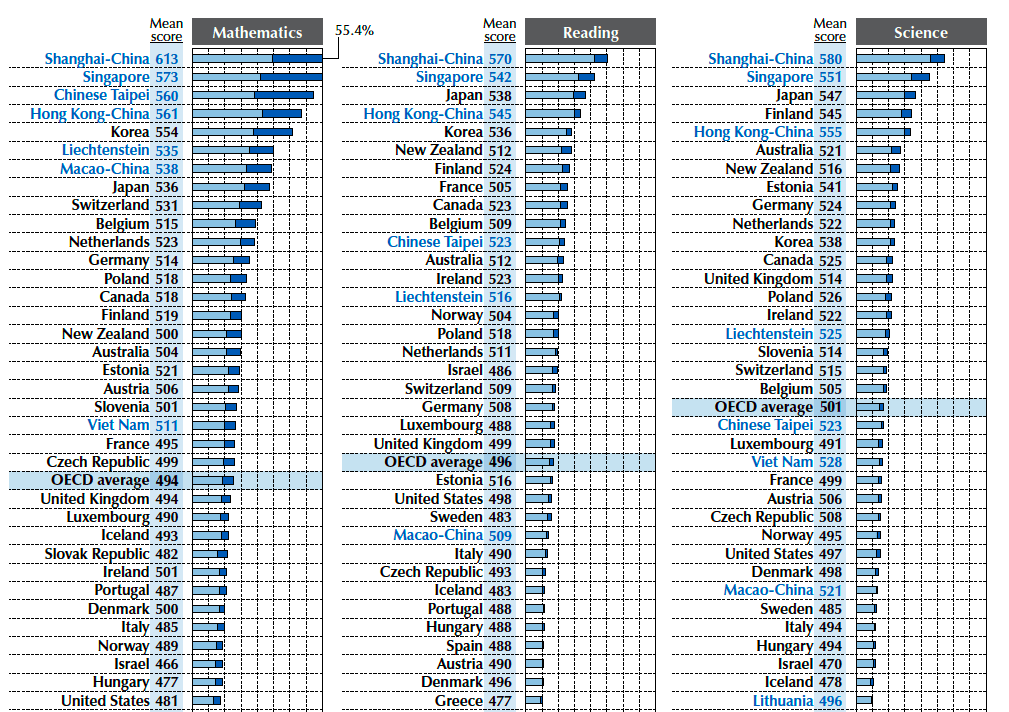
US EDUCATION: HOW IT STACKS

Leave a comment


Leave a comment

IMPACT OF MUSIC ON CHILDREN

Shaking legs in the living room on winter days or singing karaoke along with the radio, kids love listening and dancing to music.

Music is an universal language. Where you are, what you are and what your background is doesn’t matter. Good melody is something everyone can enjoy and understand.

There are tons of reasons to encourage this enthusiasm in children. Research shows that even premature babies and babies in womb respond to music.

Music boosts kids’ brain power:

"Studies show correlation between academic achievement with children who are exposed to music," says children Music specialist Meredith Legvande.

Music will improve their Memory:

"Further research has shown that participation in music at an early age can help improve a child’s learning ability and memory by stimulating different patterns of brain development," says Maestro Marturelt a conductor composer and musical director for the Miami Symphony orchestra.

Music helps them socially:

Children learn musical skill in a group. They learn how to relate to music. It is a team work. They appreciate and learn together.

Music is a confidence builder:

"You need to work together in a group to make music," says Dotson Westphalen. In the process, music teaches them patience too.

Research shows that kids who are actively involved in music

· do better in reading

· learn co-ordination, goal-setting concentration and co-operation.

· are more likely to do better in math and science because music helps build reasoning skills and cognitive development, which are important to both.

· get along better with peers and have higher self-esteem.

One study demonstrated that 2nd grade students who were given key board training while also using math software scored higher on proportional math and fraction tests than students who used the software alone. Students who have been involved in public school music programs score higher on their SATs than those who don’t.

Music also helps in lowering stress. It also reduces pain for hospitalized kids.

Studies show that infants engage more to music and other rhythmically regular sounds than speech. Infants also exhibit tempo flexibility to some extent. For very young children music has power and meaning that go beyond words. Sharing music with kids is simply one more way to give love and receive love.

Key Message: Music is a natural therapy for a healthy growing child.


Leave a comment

DOCTOR FUNNIES – 4

An elderly gentleman had serious hearing problems for a number of years.

He went to the doctor and the doctor was able to have him fitted with a set of hearing aids that allowed the gentleman to hear 100%.

The elderly gentleman went back in a month to the doctor and the doctor said, ‘Your hearing is perfect… Your family must be really pleased that you can hear again.’

The gentleman replied, ‘Oh, I haven’t told my family yet.

I just sit around and listen to the conversations. I’ve changed my will three times!

—

PATIENT: When can I come and see you?
DOCTOR: How about next week.
PATIENT: And if I die by that time?
DOCTOR: Then you can always cancel the appointment.

—

If one doctor doctors another doctor does the doctor who doctors the doctor doctor the doctor the way the doctor he is doctoring doctors? Or does the doctor doctor the way the doctor who doctors doctors?

"When a doctor falls ill another doctor doctor’s the doctor. Does the doctor doctoring the doctor doctor the doctor in his own way or does the doctor doctoring the doctor doctors the doctor in the doctor’s way"

—

Doctors’ Law – If you don’t feel well, make an appointment to go to the doctor, by the time you get there you’ll feel better. But don’t make an appointment, and you’ll stay sick.

—

Roman Lord of the Senate Cicero’s (106 – 43 BC) philosophy is still valid even today, for any country of our globe:

1. The poor: work and work,

2. The rich: exploit the poor,

3. The soldier: protects both,

4. The taxpayer: pays for all three,

5. The wanderer: rests for all four,

6. The drunk: drinks for all five,

7. The banker: robs all six,

8. The lawyer: misleads all seven,

9. The doctor: kills all eight,

10. The undertaker: buries all nine,

11. The Politician: lives happily on the account of all ten.

—

Source: Friends and Internet


Leave a comment

MODERN MEDICAL HUMOR

Young people have theirs, now Seniors have their own texting codes:

* ATD- At the Doctor’s

* BFF – Best Friends Funeral

* BTW- Bring the Wheelchair

* BYOT – Bring Your Own Teeth

* CUATSC – See You at the Senior Centre

* DWI – Driving While Incontinent

* FWIW – Forgot Where I Was

* GGPBL – Gotta Go, Pacemaker Battery Low

* HGBM – Had Good Bowel Movement

* LMDO – Laughing My Dentures Out

* LOL – Living on Lipitor

* OMSG – Oh My! Sorry, Gas

* TOT – Texting on Toilet

* WAITT – Who Am I Talking To?

Hope these help. GGLKI (Gotta Go, Laxative Kicking in!)

Source: Friends, Internet


Leave a comment

DOCTOR FUNNIES – 3

Medical Term What it Perhaps Means
Bacteria – Back door to cafeteria
Barium – What doctors do when patients die
Benign – What you be, after you be eight
Caesarean Section – A neighbourhood in Rome
Cat scan – Searching for Kitty
Cauterize – Made eye contact with her
Colic – A sheep dog
Coma – A punctuation mark
Dilate – To live long
Enema – Not a friend
Fester – Quicker than someone else
Fibula – A small lie
Impotent – Distinguished, well known
Labour Pain – Getting hurt at work
Medical Staff – A Doctor’s cane
Morbid – A higher offer
Nitrates – Rates of Pay for Working at Night,
Normally more money than Days
Node – I knew it
Outpatient – A person who has fainted
Pelvis – Second cousin to Elvis
Post Operative – A letter carrier
Recovery Room – Place to do upholstery
Rectum – Nearly killed him
Secretion – Hiding something
Seizure – Roman Emperor
Tablet – A small table
Terminal Illness – Getting sick at the airport
Tumour – One plus one more
Urine – Opposite of you’re out

Source: Internet


Leave a comment

DOCTOR FUNNIES – 2

A man feared his wife wasn’t hearing as well as she used to and he thought she might need a hearing aid.

Not quite sure how to approach her, he called the family Doctor to discuss the problem.

The Doctor told him there is a simple informal test the husband could perform to give the Doctor a better idea about her hearing loss.

Here’s what you do," said the Doctor, "stand about 40 feet away from her, and in a normal conversational speaking tone see if she hears you. If not, go to 30 feet, then 20 feet, and so on until you get a response."

That evening, the wife is in the kitchen cooking dinner, and he was in the den. He says to himself, "I’m about 40 feet away, let’s see what happens." Then in a normal tone he asks, ‘Honey, what’s for dinner?"

No response.

So the husband moves to closer to the kitchen, about 30 feet from his wife and repeats, "Honey, what’s for dinner?" Still no response.

Next he moves into the dining room where he is about 20 feet from his wife and asks, Honey, what’s for dinner?"

Again he gets no response so, He walks up to the kitchen door, about 10 feet away. "Honey, what’s for dinner?"

Again there is no response.

So he walks right up behind her. "Honey, what’s for dinner?"

"James, for the FIFTH time I’ve said, PIZZA!"

—

Ever since I was a child, I’ve always had a fear of someone hiding under my bed at night.

So I went to a psychiatrist and told him. . . ‘I’ve got problems. Every time I go to bed I think there’s somebody under it. I’m scared. I think I’m going crazy.’

‘Just put yourself in my hands for one year,’ said the psychiatrist. ‘Come talk to me three times a week and we should be able to get rid of those fears..’

How much do you charge?’

Eighty dollars per visit,’ replied the expert.

I’ll sleep on it,’ I said.

Six months later, he met me on the street. ‘Why didn’t you ever come to see me about those fears you were having?’ he asked.

Well, eighty bucks a visit three times a week for a year is an awful lot of money!

A bartender cured me for $10. I was so happy to have saved all that money that I went and bought me a new pickup!’

‘Is that so?’ With a bit of an attitude he said, ‘and how, may I ask, did a bartender cure you?’

‘He told me to cut the legs of my bed! Ain’t nobody under there anymore!’

—

Source: Friends and Internet

DATED ADS – MAKES ME LAUGH AND CRY (5)

Leave a comment


Leave a comment

ADHD and Kids

I am increasingly seeing parents concerned that their child is ADHD because he/she is not listening to them. I am concerned with this trend of “labeling” the child for life. Labeling removes the opportunity to prevent and fix problems with non-medicine alternatives rather than resorting to pharma solutions.

The three key symptoms of ADHD are hyperactivity, impulsivity, and inattention. These symptoms typically interfere with the child’s functioning in social and academic settings. Children with ADHD have poor focusing and organization skills, which means, among other difficulties, that they have trouble organizing their belongings and tasks.

Parenting a child with true ADHD can pose special challenges but first realize that ADHD is not an end/period but a comma in the child’s life. Many famous, accomplished, and indeed brilliant people of the past and present have had ADHD.

Here is what you can do to Prevent and Manage ADHD:

1. To Prevent

· If you are concerned, communicate with the doctor. If a formal evaluation is needed, this evaluation will involve professionals from various disciplines to provide a comprehensive medical, developmental, educational, and psychosocial evaluation.

· Be Specific to your kids. Avoid vague or open-ended instructions such as “clean up your room” or “Be good”. Break down instructions of larger tasks into simple steps.

2. Avoid

· Inconsistency. Children with ADHD respond well to a defined and predictable system of rewards and consequences.

· Pharma solution as the first step. Kids exhibit different degrees of ADHD and so the care not usually the same. Also most kids on ADHD medicines seem to lose the zest for life. Try parenting changes first.

· Big goals or addressing all behavioral issues at the same time. Set small attainable goals. Focus on one or two challenging behaviors at a time.

· Foods containing color additives like Yellow 5,6 or 13 and Red 3, 40 etc.

3. Follow this care:

· Set an established, while not inflexible, pattern for getting ready in the mornings, preparing for bedtime, and managing after-school homework. It helps the child to know what to expect. It’s very important to stick to the rules and provide fair and consistent rewards and consequences when the household rules are not followed.

· Hang the checklists in a conspicuous place and allow your child to check off completed items as they are done.

· Some parents find that purchasing a second set of textbooks for the home is useful for the child who frequently forgets to bring the proper materials home. They also keep homework space free of external distractions like television and video games.

· Pick a sport (that involve constant activity or motion) and that suits your child and his or her abilities. It is known to help.

· Take away distractions like TV, video games, and cell phones from their bed room. They interfere with sleep, which is critical for ADHD kids

· Avoid soda and caffeine from their diet. Try slight diet changes (gluten free, sugar free etc) to see if they perform better.

· Add Omega-3s to their diet instead. These are found in salmon, walnuts, spinach, broccoli, edamame, flaxseed seem to do good for ADHD.


Leave a comment

WAYS TO SOOTH YOUR BABY

If your baby becomes fussy within an hour of eating, hunger may not be the reason. Instead of offering a bottle, try these “S’s:

· Swaddling. Being wrapped up in a blanket helps calm a cranky baby.

· Step on the metal: Strap the baby in a car seat and take a drive around the block. The gentle rocking of the car will put him/her to sleep.

· Shushing. Soothing sounds will help your child relax and settle.

· Sing a Lullaby: Babies love the sound of the parent’s gentle and loving voices.

· Swinging. Gently rocking your baby in your arms is another proven strategy.

· Sucking. Offer a pacifier instead of a bottle.

· Side/stomach position. This should only be used when your baby is awake, since sleeping on the belly raises risk for sudden infant death syndrome. When a baby is fussing, however, this position helps turn off crying.


Leave a comment

DOCTOR FUNNIES – JOKES

Let me tell you about my doctor.

He’s very good!

If you tell him you want a second opinion,

He’ll go out and come in again.

—

Another time, a man came running in the office and yelled,

"Doctor, doctor! – my son just swallowed a roll of film!"

The doctor calmly replied, "Well let’s just wait and see what develops."

—

I remember one time I told my doctor

I had a ringing in my ears.

His advice: "Don’t answer it."

—

When I told my doctor I broke my leg in two places,

He told me to stop going to those places.

—

You know, doctors can be so frustrating.

You wait a month and a half for an appointment,

Then he says, "I wish you had come to me sooner."

—

During A Visit To My Doctor, I Asked Him, "How Do You Determine Whether Or Not An Older Person Should Be Put In An Old Age Home?"

"Well," He Said, "We Fill Up A Bathtub, Then We Offer A Teaspoon, A Teacup And A Bucket To The Person To Empty The Bathtub."

"Oh, I Understand," I Said. "A Normal Person Would Use The Bucket Because It Is Bigger Than The Spoon Or The Teacup."

"No" He Said. "A Normal Person Would Pull The Drain Plug.

Do You Want A Bed Near The Window..?"

—

Source: Friends and Internet

DATED ADS – MAKES ME LAUGH AND CRY (3)

Leave a comment


Leave a comment

AUTISM, A ROAD THAT NEEDS PATIENCE AND PERSEVERANCE

Autism is a developmental brain disorder.

Early screening is important. The earlier it can be determined that a child has autism, the sooner he or she can get help. Parents who want a screening for their child should be seek a pediatric neurologist. It’s also imperative to get treatment early because in some states, insurance companies cover specific therapies only until the child reaches age 7, after which time payment must be made out of pocket.

Some parents believe the vaccine that protects against measles, mumps and rubella (MMR) has caused the spike in autism. autism symptoms usually appear when a child is between 18 months and 3 years of age, the same age when vaccination shots peak. The Center for Disease Control and Prevention (www.cdc.gov), and at the American Academy of Pediatrics (aap.org), agree that the MMR vaccine is not responsible for the rise in cases of autism. Base decisions on facts, rather than on fear.

Food can become a major issue because these children often choose their foods selectively.To make matters worse, some children with autism have poor chewing skills, or may refuse to eat solid foods. There are NO miracles diets. Some vouch by gluten-free or dairy-free diets. Autism is a complex disorder, and a well-balanced diet is always best for a child.

These kids may exhibit behavior —which may include tantrums, self-injury and aggressiveness. These are learned behavior. The behavior is a way for a child with autism to communicate the need for attention or to escape from an undesirable situation. Learn to read the cues and change your behavior to avoid stressful time.

A child who is autistic is a strain, especially on siblings. Be upfront and honest with your other children about why the sibling with autism needs extra care. If possible, involve siblings in the care giving.

Beware of what you read.Because autism expresses itself differently in every child, only a small percentage of the vast amount of information online may be applicable to your child’s situation.

Find a board-certified behavior analyst who can help assess the motivation behind the disruptive behavior at www.bacb.com.

DATED ADS – MAKES ME LAUGH AND CRY (2)

Leave a comment


Leave a comment

STRENGHTEN YOUR BRAIN

  • · The best way to ‘consolidate a memory’ is to go through the information just before going to sleep.
  • · Balling up your right hand and squeezing it tightly makes it easier to memorize things. When you want to retrieve the information, clench the left fist. These movements activate brain regions key to the storing and recall of memories.
  • · Aerobic exercise improves cognitive function and memory. It also encourages the growth of new brain cells in the hippocampus – an area of the brain important in memory and learning
  • · Music with strong rhythms and patterns, like reggae and salsa, are best for memory and problem-solving.
  • · Studies found saying what you want to remember out loud to yourself– or even mouthing it helps with recall.
  • · Break numbers into chunk of 3 or 4 numbers. Chunking numbers according to something you find meaningful, like the age of someone you know, an address or a date to help you remember.
  • · A diet low in red meat and dairy and high in omega-3 fatty acids found in oily fish and nuts can help preserve memory and reduce dementia risk.
  • · Doodling helps – doodlers performed 29% better than non-doodlers when asked to recall names and places.
  • · People who walked around a garden did 20% better on a memory test than those who walked around streets.
  • · Practice meditation.
  • · Eat a good breakfast.
  • · Break your routines
  • · Stop watching so much television
  • · Stop relying on your GPS to tell you where to go.
  • · Speak a new tongue
  • · Walk around the house blindfolded.
  • · Expand your vocabulary.
  • · Lack of sleep boosts the formation of beta amyloid, the toxic protein that clogs up the brain according to a study

Source: Multiple

SLEEP NEEDED FOR KIDS

Leave a comment


Leave a comment

NEWFLASH: EARLY TO BED, EARLY TO RISE, MAKES A KID WISE

Late nights and lax bedtime routines can blunt young children’s minds, research suggests.

The findings on sleep patterns and brain power come from a UK study of more than 11,000 seven-year-olds.

Erratic bedtimes were most common at the age of three, when around one in five of the children went to bed at varying times.

By the age of seven, more than half the children had a regular bedtime of between 19:30 and 20:30.

Youngsters who had no regular bedtime or who went to bed later than 21:00 had lower scores for reading and maths.

Overall, children who had never had regular bedtimes tended to fare worse than their peers in terms of test scores for reading, maths and spatial awareness.

The impact was more obvious throughout early childhood in girls than in boys and appeared to be cumulative.

The children with late and erratic bedtimes came from more socially disadvantaged backgrounds and were less likely to be read to each night and, generally, watched more TV – often on a set in their own bedroom.

Sleep experts point to a particular problem due to technology in children’s bedroom – specifically the use of screens on smartphones or laptops late at night.

The take-home message is really that routines really do seem to be important for children.

"Establishing a good bedtime routine early in childhood is probably best, but it’s never too late."

There was no evidence that putting children to bed much earlier than 19:30 added anything in terms of brain power.

Lack of sleep is a serious physical barrier to learning. Research into sleep disorders and brain function has shown the importance of sleep in memory and consolidating information. Without sleep, the brain struggles to absorb and retain ideas.

Source: http://www.bbc.co.uk/news/health-23223751

WAY OUR CHILDREN LEARN

Leave a comment