Just because your parents did so does not mean you should do the same.
The challenges faced by your parents are different from the ones that you face.
Adapt to the new ways of parenting.



Just because your parents did so does not mean you should do the same.
The challenges faced by your parents are different from the ones that you face.
Adapt to the new ways of parenting.
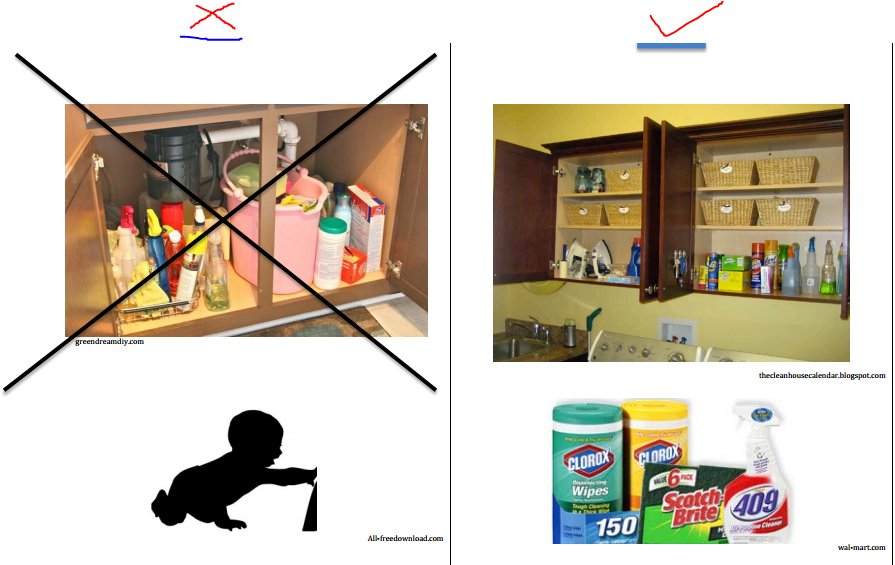
Children feel the environment with their mouth. So everything end up with a lick. Beware. That includes your household chemicals.
So follow this safer way to storing chemicals around babies.
The U.S. Department of Agriculture released its annual report, Expenditures on Children and Families, also known as the Cost of Raising a Child. The report shows that a middle-income family with a child born in 2013 can expect to spend about $245,340 ($304,480 adjusted for projected inflation*) for food, housing, childcare and education, and other child-rearing expenses up to age 18. Costs associated with pregnancy or expenses occurred after age 18, such as higher education, are not included.
While this represents an overall 1.8 percent increase from 2012, the percentages spent on each expenditure category remain the same. As in the past, the costs by location are lower in the urban South ($230,610) and rural ($193,590) regions of the country.
"Food is among the top three expenses in raising children," said CNPP Executive Director Angela Tagtow. "Parents have the challenge of providing food that is not only healthful and delicious, but also affordable. We have great resources such as ChooseMyPlate.gov that features tips to help families serve nutritious and affordable meals. I encourage parents to check out our Healthy Eating On a Budget resources, 10-Tips Nutrition Series, recipes, and MyPlate Kids’ Place, which features digital games for kids to get engaged themselves in healthy eating."
The full report, Expenditures on Children by Families, 2013, is available on the web at www.cnpp.usda.gov. In addition, families can enter the number and ages of their children to obtain an estimate of costs with a calculator via the interactive web version of the report.
– Source: USDA PR
Sad stat: According to a new report from the NPD Group, we’re alone for about 60 percent of our breakfasts, over half of our lunches, and a whopping 70 percent of our "non-meals."

Source: NPD
Can’t be said more succinctly

Research done at U.S. National Health and Nutrition Examination Survey, 2011-2012 found men, women and children who were exposed to phthalates (endocrine-disrupting chemicals found in plastics and some hygiene products) tended to have lower blood testosterone levels. Over the past 50 years researchers have identified a trend of declining testosterone in men and an increase in related health issues.
TAKEAWAY: Avoid plastic containers and any food wrapped in plastic
Having Gratitude for what you have is the sure fire way to happiness


Thoughts leads to desire
Desire to Words
Words to Actions
Action to Habit
Habit to Character
Change your thoughts and change your character
To preserve the meat the industry uses Nitrates/Nitrites which are carcinogenic.

Did you know that pound for pound, Spinach has more protein than most meats.?

Puberty is the name for the time when your body begins to develop and change as you move from kid to adult.
We’re talking about stuff like girls developing breasts and boys starting to look more like men.
In many countries, children mature earlier these days. The age of puberty or menarche in the United States fell about 0.3 years per decade from the mid-1800s (when girls had their first menstrual period, on average, at age 17) until the 1960s, according to a 2003 study in the journal Endocrine Reviews. It also suggests better nutrition, health and economic conditions often play roles in lowering the age of puberty.
Today the average age of puberty in U.S. girls is about 12.8 to 12.9 years. The onset of puberty, however, is defined as the time when a girl’s breasts start to develop. In the United States, it is 9.7 years for white girls, 8.8 years for black girls, 9.3 years for Hispanic girls and 9.7 years for Asian girls.
CAUSES OF PUBERTY
Many causes of early puberty are somewhat unclear,
· girls who have a high-fat diet and are not physically active or are obese are more likely to physically mature earlier;
· Exposure to chemicals that mimic estrogen (known asxenoestrogens) is a possible cause of early puberty in girls;
· BPA, Bisphenol A, a xenoestrogen found in hard plastics, has been shown to affect sexual development.
· A tumor in the brain or spinal cord or a defect in the brain present at birth, such as excess fluid buildup (hydrocephalus) or a noncancerous tumor (hamartoma)
· McCune-Albright syndrome — a genetic disease that affects bones and skin color and causes hormonal problems
· Congenital adrenal hyperplasia — a group of genetic disorders involving abnormal hormone production by the adrenal glands
· Hypothyroidism — a condition in which the thyroid gland doesn’t produce enough hormones
CHALLENGES OF EARLY PUBERTY
Early sexual development warrants evaluation because it may:
1. induce early bone maturation and reduce eventual adult height;
2. indicate the presence of a tumor or other serious problem;
3. cause the child, particularly a girl, to become an object of adult sexual interest.
4. Studies show that girls who mature earlier are more likely than those who mature later to develop high blood pressure and type 2 diabetes later in life.
5. Early puberty additionally puts girls at a "far greater" risk for breast cancer later in life.
6. Early puberty also puts girls at a higher risk for teasing or bullying, mental health disorders and short stature as adults.
When to see a doctor
Make an appointment with your child’s doctor for an evaluation if your child has any of the signs or symptoms of precocious puberty.
Signs and symptoms in girls include:
· Breast growth
· First period (menarche)
Signs and symptoms in boys include:
· Enlarged testicles and penis
· Facial hair (usually grows first on the upper lip)
· Deepening voice
Signs and symptoms that can occur in boys or girls include:
· Pubic or underarm hair
· Rapid growth
· Acne
· Adult body odor
KEY MESSAGE FOR PARENTS: While you cannot do much about Genetics, you can take a few actions that can mitigate early puberty.
· Cut out plastics and other chemicals/additives, colors, preservatives and processed food from your kid’s diet
· Helping children control their weight is suggested to help delay puberty.
Source: Livescience, Wikipedia, Mayo and Other
Challenge for you: Incorporate these at least once a week in your food.


Think about your next challenge differently

Source: Cleveland Clinic
Surprisingly, the U.S. does not top the list. While the U.S. had the highest obesity rate among adults, Greece had the largest proportion of overweight children.

AND the most OBESE cities in US? It is in W Virginia
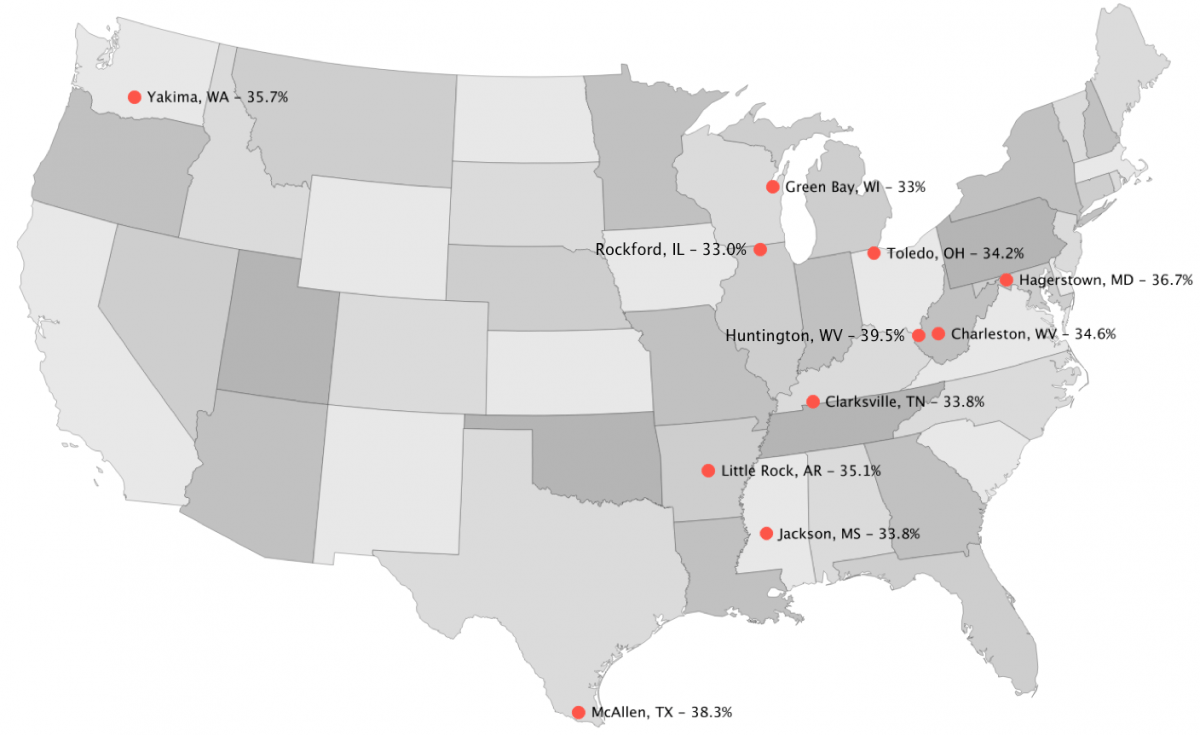
Can you believe that?
In 1912 Beyer marketed Heroin as a cough suppressant.

http://en.wikipedia.org/wiki/Heroin – mediaviewer/File:Bayer_Heroin_bottle.jpg
We do NOT recommend any commercial over the top cough syrup for kids. If you must, try honey (for kid > 1 yr) or turmeric milk.

Glass half full or Half Empty. The choice of how is see is yours.