A wonderful resource for parents to buy and eat healthy on a budget. Go to http://www.choosemyplate.gov/budget/



A wonderful resource for parents to buy and eat healthy on a budget. Go to http://www.choosemyplate.gov/budget/
HURRAY TO DALLAS. IT MOVED DOWN THE LIST OF CRAZY DRIVERS.
| Least Courteous | |
| 2014 | 2013 |
| Houston | New York City |
| Atlanta | Dallas |
| Baltimore | Detroit |
| Washington DC | Atlanta |
| Boston | Minneapolis |
| Most Courteous | |
| 2014 | 2013 |
| Portland | Portland |
| Pittsburgh | Cleveland |
| St. Louis | Baltimore |
| San Francisco | Sacramento |
| Charlotte | Pittsburgh |
Source: AutoVantage
The U.S. Census just released estimates of the 2013 population and recent population change for every city in the country with at least 50,000 residents. Here are the cities that grew at least 4.0% between 2012 and 2013

Livability.com has named Plano in the TOP 10 (rank #5)in Best Cities for Kids, 2014.
Factors considered for inclusion on the list included: concentrations of school-age children; schools; crime rates; health insurance coverage; parks; playgrounds; libraries as well as the percentage of restaurants that feature kids’ menus.
Top city on the list
· Boise, ID.,
· Downers Grove, IL.,
· Overland Park, KS.,
· Cedar Rapids, IA.,
· Plano, TX.,
· Carmel, IN.,
· Brentwood, TN.,
· Palo Alto, Calif.,
· Royal Oak, MI.,
· Newton, MA.
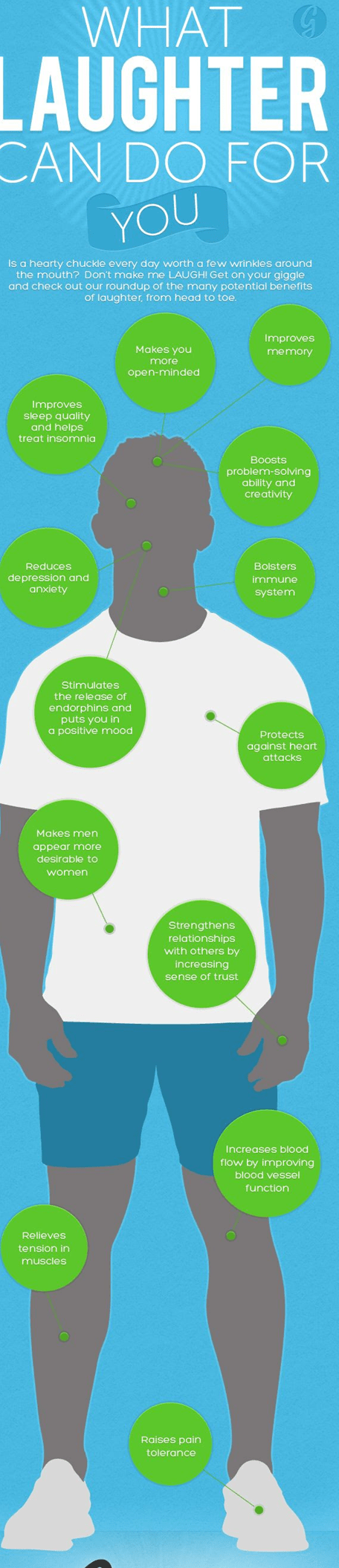
Laugh more

A great quote to help our child become more responsible and understand that the choices they make affect the situations in their life in future.
· “Always try to do it yourself before you ask the teacher.”
· “You have to show and share what you know.”
· “You can only get good at something if you practice hard.”
· “It’s not right to be mean to someone – even if the teacher isn’t looking.”
· “It’s good to read with your buddy from the third grade.”
Two loving parents

Toddler’s world is filled with stress and strains like us adults. They are also very busy playing, learning and discovering new new things in their own small world. Toddlers are trying to master this world and when they aren’t able to accomplish a task, they turn to the only tool at their disposal for venting their frustration. That tool is called tantrum.
Tantrums are often the result of kid’s frustrations with the world. Temper tantrums is a sudden, unplanned display of emotion. It is not just an act to get attention. Tantrums enter into toddler’s world at the age of 2 and find its way out as he grows old by four. They are common in every child’s life as frustrations are an unavoidable part in their lives.
As language skills improve, tantrums tend to decrease. Toddlers tend to understand more than they can express. Imagine not being able to communicate what you want. A frustrating experience that may precipitate tantrums.
Increasing need for autonomy also causes tantrums. Toddlers want a sense of independence and control over environment. This creates a kind of power struggle.
Tantrum tactics.
The most important thing to remember is not to lose your cool. When you are faced with a kid in the throes of a tantrum, no matter what the cause is, keep calm. Don’t get frustrated. Take deep breaths and think clearly.
Your child relies on you. Hitting and spanking won’t help. They send the message that using force and physical punishment are okay. That will lead to more negative behaviors.
First, try to understand what is going on with the child. Where the child is coming from. If the child is disappointed, he needs comfort. If he is hungry/sleepy, he may need food or sleep.
In a different situation, if the child is refused something, toddlers have a fairly simple reasoning skill. So you aren’t going to get far in explaining. Ignoring the outburst is one way to handle it.
Kids, who are in danger of hurting themselves and others, should be moved to a safer and quiet place.
Strategies in dealing with tantrums
· Make sure he is acting up because he isn’t getting enough attention. Shower the kids with attention. Even if the kid is playing, just talking to him, commenting and praising his behavior will go a long way. Rewarding him for good behavior helps a lot. This in turn will help to increase those positive behaviors.
· Try and give them control over small things. Like “Do you want apple or orange juice?” “Do you want to brush now or later?” “Where do you want to play?”
· Keep off-limits objects out of reach or out of sight. So the struggle becomes less.
· Distract the child. Take advantage of the short attention span of the toddlers. Replace the object. Take him away from the scene of action.
· Set the stage for success when the child is playing. When he is trying to master new task offer him age-appropriate toys or games. Start something simple before moving in to challenging ones.
· Consider the request carefully when the child wants something. Is it outrageous? May be it isn’t. Choose your battles. Accommodate when you can.
· Know your child’s limits. When the child is sleepy or tired it is not the time to go for a grocery shopping.
· If safety issue is involved, opt for time-out. Kids must understand that you are inflexible on safety issues.
After the upheaval of tantrums, what next?
· Don’t reward the child after tantrums. If you give in, then tantrums becomes a launching pad for the kid. If you allow yourself to be held hostage by tantrums, your kid will continue to use them perpetually.
· Toddlers will be vulnerable after tantrums. So now is the time for big hugs and reassurances that no matter what he is loved.
· Make sure your kid gets enough sleep and food on time. That will dramatically reduce the tantrums.
When do you need a doctor’s help?
· You are uncomfortable with your responses or you feel out of control.
· You keep giving in.
· The tantrum increases in frequency, intensity and duration.
· Your child hurts himself or others.
· Your child is destructive.
· Your child displays more low self-esteem, or extreme dependence.
WATCH
Takeaway
Skipping DTaP Shot Boosts Pertussis Risk
Study
Researchers found that missing some doses of the diphtheria, tetanus toxoid, and acellular pertussis (DTaP) vaccine increases the risk of whooping cough in young children.
Children (ages 3 to 36 months) who missed three doses of the DTaP vaccine were nearly 19 times more likely to develop pertussis than those appropriately vaccinated, and those who missed four doses were 28 times more likely to develop the disease per Kaiser Permanente Colorado
Source: JAMA Pediatrics.
Undervaccination is an increasing trend, for a variety of reasons, including parental choice. And it is an important contributing factor in recent pertussis outbreaks across the country.
Need more reasons to believe in vaccines?
Rotavirus is a common cause of gastroenteritis in babies, which can result in severe dehydration and admission to hospital.
Vaccinating babies against a virus that can cause diarrhea and vomiting also seems to protect some adults, a U.S. study suggests.
In Tuesday’s online issue of JAMA, researchers from the U.S. Centers for Disease Control and Prevention in Atlanta said they found fewer adults were getting severe cases of gastroenteritis after rotavirus vaccination became standard for infants.
Source: CBC and JAMA
The last two weeks of May are typically exam week in school.
While it does not matter much in elementary school, high school children are typically stressed.
Here is a good infographic on how to combat the stress of upcoming exams.

NEWS FLASH: SUBTLE PSYCHOLOGY OF SHOPPING IN EMPTY STOMACH
A new study offers evidence to support what many people have learned for themselves: never go grocery shopping when you’re hungry. Researchers found that people who hadn’t eaten all afternoon chose more high-calorie foods in a simulated supermarket than those who were given a snack just before online food shopping.
And in a real grocery store, shoppers bought a higher ratio of high-calorie foods to low-calorie ones in the hours leading up to dinnertime compared to earlier in the day, the study team observed.
SOURCE: bit.ly/MbBLbb JAMA Internal Medicine, online May 6, 2013.
10 Things Your Teen Wants You to Know (But May Not Tell You)
1. Please don’t give me everything I want. Saying no shows me you care. I appreciate guidelines.
2. Don’t treat me as if I were a little kid. Even though you know what’s "right", I need to discover some things for myself.
3. Respect my need for privacy. Often I need to be alone to sort things out and daydream.
4. Never say, "In my day…". That’s an immediate turn off. Besides, the pressures and responsibilities of my world are more complicated than they were when you were my age.
5. I don’t pick your clothes; please don’t criticize mine. We can disagree and still respect each other’s choices.
6. Refrain from always rescuing me; I learn most from my mistakes. Hold me accountable for the decisions I make in life; it’s the only way I’ll learn to be responsible.
7. Be brave enough to share your disappointments, thoughts and feelings with me. (By the way, I’m never too old to be told I’m loved.)
8. Don’t talk in volumes. I’ve had years of good instruction; now trust me with the wisdom you have shared.
9. I respect you when you apologize for a thoughtless deed or word on your part. It proves that neither of us is perfect.
10. Set a good example for me as God intended you to do. I pay more attention to your actions than your words.
– Dr. Kevin Leman


